






To the British layperson, innovation (and certainly invention) is often considered as something created by an erratic loner tinkering with some technology in the garden shed. (In other cultures, it might be a spare room or a garage!) With this assumption comes the impression that innovation happens when you create something from nothing. Starting, as it were, with a blank slate.
This appears to be a fundamental misunderstanding of corporate innovation. Generally, the challenge is not to start with a blank slate, but rather by starting with what you already have (people, capabilities, assets, relationships etc) to create new value and find new competitive advantage through innovation. Soon Yu articulates this well when he says, “Don’t chase the new, innovate the old”.
Solving the strategic innovation challenges required for sustainable growth in these uncertain times really starts with innovating your problem. Early-stage innovation is where the greatest opportunities for creating competitive advantage are, and where the biggest uncertainties are. The process and approach you follow will determine the result, as will the information and people that you feed into the process. If you don’t understand your problem, how can you choose the right process at the beginning and therefore what hope do you have about finding the best solution?
Your challenge is unique: Each industry, company, and innovation challenge is unique. Yes, organisations can learn from other companies, industries and even from nature – but it’s best to view this as a source of inspiration and learning, not the answer. Even close competitors in the same industry have different tangible and intangible assets, cultures etc. Even if you chose to replicate your rival’s success, their existence in the market and their business model, your customer’s familiarity with them will mean your challenge will always be inherently different.
For strategic innovation (as opposed to incremental improvement or product development), those multi-faceted, future facing uncertainties rule. Yet conventionally, the way clients choose innovation and design partners at the start of a collaboration project is often based on their response to a fixed brief or a pitch, usually answered with a nice linear process. This is an attractive proposition; can you outsource your sleepless nights or your future ambition to purchase a finished solution? Given the future uncertainty and inherent uniqueness of any individual strategic innovation challenge, and given that until you’ve engaged in the challenge, you’re unlikely to know what the best approach will be, this may be one reason for the industry’s poor hit rate.
So, if the innovation is to be strategic, YOU must be a part of the process – the risk of missing information, outsiders not understanding what you already have or simply ending up with NIH (not-invented-here) syndrome is too great to leave to chance. The process you follow does matter, but it’s not possible to dictate this in advance. Strategic innovation shouldn’t be outsourced – it’s YOUR business. Instead, collaborate and let the journey you follow reveal the critical uncertainties and the right process.

How the Right Human Element Decides Who Wins the Innovation Race
Data Without Worldview is Meaningless
Innovation Strategies in Times of Scarcity
When scarcity reshapes the business landscape, how can innovation move forward?
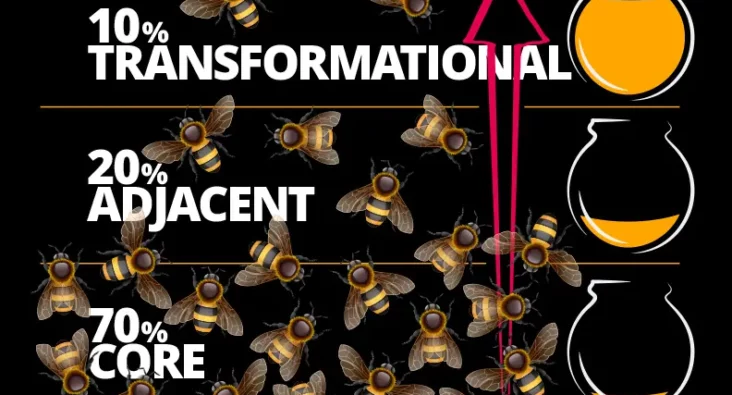
Why your innovation team is no longer innovating
Why Innovation Teams Stop Innovating: The Core Business Trap

Sustainable Disruption
Sustainable Innovation Through Disruption: Breaking the Business-as-Usual Mould

Critical Friend: Accelerating Innovation
Critical Friend for Innovation: 7 Ways to Accelerate Business Growth

An observation about innovation collaborations
Why You Can't Outsource Strategic Innovation: The Collaboration Imperative

Why do we need diversity to drive innovation?
Why Gender Diversity Drives Innovation: Leadership Statistics and Business Benefits

7 insights for creating successful IoT products
7 Principles for Successful IoT Product Development Without Gimmicks

43 Quintillion Types of Innovation
43 Quintillion Types of Innovation: What Rubik's Cubes Teach Us About Problem-Solving

4 important ways to set your innovation team up for success
How to Set Up Your Innovation Team for Success: 4 Critical Factors
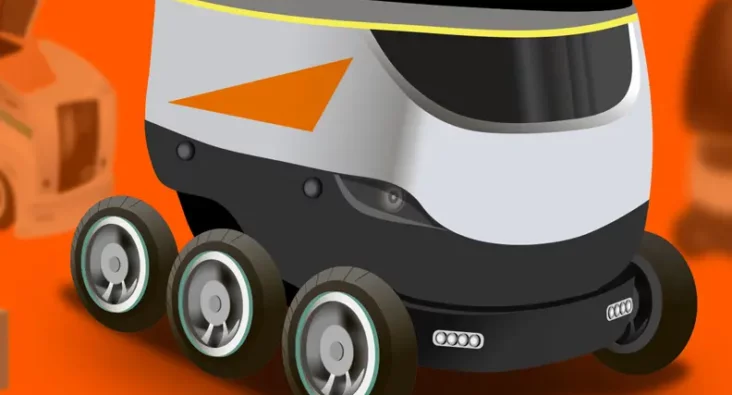
Our pavements will be crowded with robots
Delivery Robots on Pavements: Benefits, Challenges and Design Innovation

Rethinking Waste: When By-Products Become Resources
Rethinking Waste: Why By-Products Are Resources, Not Rubbish
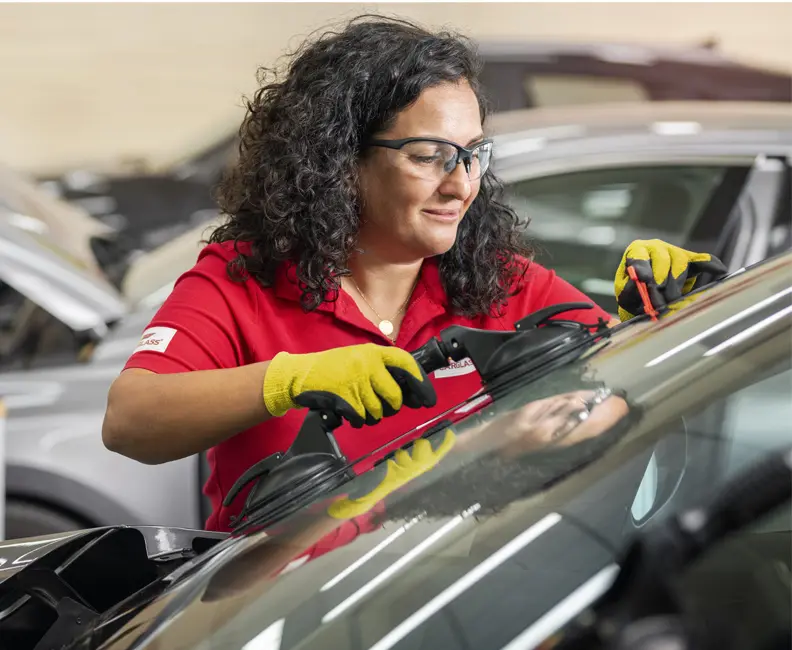
Innovation to reduce sharps hazards at Belron
A challenge was set by Belron’s global operations to make razor blades significantly safer, without compromising the quality of windscreen repairs.
Read More

From Insights to Strategy to Design with Spinbrush
Discover how we enabled Spinbrush to use consumer insights to innovate and excel in the competitive powered toothbrush market with our strategic approach.
Read More

The Future of Plastic Packaging for Klöckner Pentaplast
Exploring the future of fresh food packaging with Klöckner Pentaplast. Read how our innovative strategies helped balance enhancing sustainability whilst meeting consumer demands.
Read More

Facilitating CamelBak’s connected product innovation strategy
Facilitating CamelBak's strategic innovation shift towards connected products by hosting a Learning Exchange with industry experts, shaping a confident future direction for the brand's digital integration.
Read More

Strategic Alignment for Global Veterinary Brand, Vetoquinol
Discover how Ignite Exponential help Vetoquinol maintain market dominance with robust, innovative life cycle management planning.
Read More

New central innovation group for Pentland Brands
We rebuilt Pentland Brands' central innovation function, creating the structure, process and vision needed to drive transformative growth across Speedo, Berghaus, Endura and Mitre.
Read More

Driving growth & enhanced experience at Kimberly-Clark
We helped Kimberly-Clark learn from non-competing industry leaders about how best to drive sustainability transformation –and to build its own evidence-based transformation strategy.
Read More

Innovation Design: New technology to transform luxury products
Successfully integrating a new technology within a luxury brand's product line, significantly enhancing consumer experience and setting a benchmark for future energy-efficient innovations.
Read More

Expanding FemTech Innovation for MAS Holdings
We helped MAS Holdings' FemTech division Femography identify strategic brand partnerships to develop innovative technology platforms for washable absorbent underwear, maternity wear, and anti-flush menopause clothing across the feminine health market.
Read More

Transforming the product assembly experience with fitness giant, iFIT
Explore how we enhanced the product assembly experience by focusing on innovative techniques and user-centric strategies.
Read More

Revolutionising Cold Chain Logistics for Celsius
We helped Celsius revolutionise cold chain logistics by creating demonstration videos and interactive UI prototypes that secured investor funding and customer validation for their digital platform connecting food and pharmaceutical distributors with unused storage capacity.
Read More

Profiting From Spare Capacity
We helped a US electronic component manufacturer identify profitable new products to fill spare production capacity, auditing their capabilities, prioritising 10 market opportunities, and upskilling their engineering team to develop a new technology line.
Read More